
In the global tea industry, there is a specific phrase that commands instant respect and signifies the highest tier of quality: Taiwan Oolong Tea. For centuries, this small island in the Pacific has been revered as the “Champagne of Teas.” While China produces volume and India produces strength, Taiwan produces sophistication. For bubble tea shop owners, tea distributors, and beverage connoisseurs, understanding the value of Taiwanese tea is not just a matter of taste; it is a business imperative. The complex floral notes, the creamy textures, and the lingering aftertaste of authentic Taiwan Oolong distinguish a premium brand from a generic one.
As Mustea, your strategic partner in global tea sourcing, we are deeply rooted in this land. Our connections with local farmers go back generations. We understand that the “secret” of Taiwan Oolong Tea is not one single thing, but a perfect storm of unique geography, advanced agricultural science, and centuries of artisanal craftsmanship. In this deep dive, we will take you behind the scenes of the tea mountains. We will explain why sourcing from Taiwan is the ultimate upgrade for your menu and how the specific terroir of this island creates flavors that cannot be replicated anywhere else on Earth.
Chapter 1 The Geography of Flavor: Why Terroir Matters
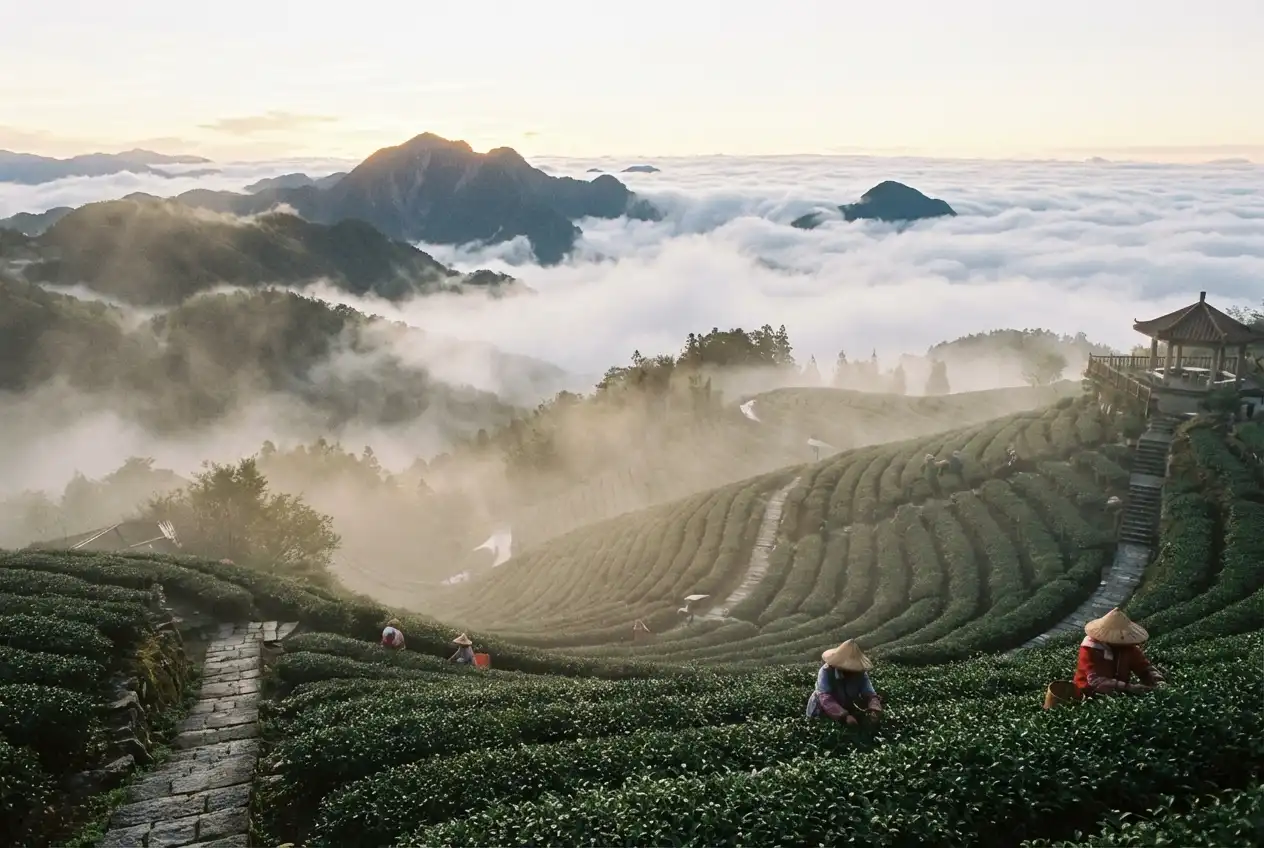
To understand the tea, you must understand the land. Taiwan is a vertical island. It sits on the Tropic of Cancer, the same latitude as Hawaii, but it features massive mountain ranges that shoot up to nearly 4,000 meters. This dramatic topography creates the perfect environment for Camellia Sinensis.
The High Mountain Difference
You will often hear the term “High Mountain Tea” or “Gao Shan Cha.” In Taiwan, this legally refers to tea grown above 1,000 meters. At these altitudes, the magic happens. The air is thin and cool, and the mountains are perpetually shrouded in mist. This cloud cover acts as a natural shade, reducing the intensity of the sunlight. Why does this matter for your cup of tea? The reduced sunlight lowers the catechin content (which causes bitterness) and increases the L-theanine and amino acids (which create sweetness and savory umami notes). Furthermore, the cold nights and warm days cause the tea plants to grow slowly. This slow growth allows the leaves to concentrate more aromatic compounds and pectin. The result is a tea liquor that is thick, smooth, and naturally sweet without adding sugar. This is the “High Mountain” signature that Mustea delivers to our clients.
The Island Climate
Taiwan is surrounded by the ocean, ensuring high humidity year-round. This constant moisture is crucial for the leaves to remain tender. The soil in the central mountain range is rich in organic matter and slightly acidic, ideal for tea roots. Unlike flatland mega-plantations in other countries that focus on mechanical harvesting for yield, Taiwan’s terrain forces a focus on quality over quantity.
Chapter 2 The Cultivars: The Genetics of Taste
While the land provides the canvas, the tea cultivar provides the paint. Taiwan has one of the most advanced tea research stations in the world (TRES), which has developed specific varietals optimized for Oolong production.
Qing Xin (Green Heart)
This is the king of Taiwan Oolong Tea cultivars. It is used for high-grade High Mountain Oolong and Dong Ding Oolong. It is fragile and difficult to grow, but it offers an unparalleled orchid-like aroma and a clean, crisp finish. When we supply premium loose leaf tea to high-end tea salons, Qing Xin is often the cultivar of choice.
Jin Xuan (Golden Daylily – #12)
Famous globally as “Milk Oolong,” this cultivar was developed in Taiwan in the 1980s. It has a natural, creamy mouthfeel and a milky fragrance that is not added flavor, but a genetic trait of the leaf itself. It is incredibly popular for bubble tea shops because its creamy profile pairs perfectly with milk and boba. It offers a premium experience at a more accessible price point than Qing Xin.
Four Seasons Spring (Si Ji Chun)
For the commercial beverage industry, this is the workhorse. It grows vigorously and produces a floral, fragrant tea year-round. It has a potent aroma that can cut through syrups and fruit juices, making it an excellent base for fruit teas. Mustea recommends this for high-volume shops looking for a balance between cost and distinct aroma.
Chapter 3 The Art of Processing: Where Science Meets Soul
If you plant a Chardonnay grape in France, it does not become wine automatically. The winemaker makes the wine. Similarly, growing tea leaves is only 40% of the process; the remaining 60% is the processing. Taiwan Oolong Tea processing is widely considered the most complex in the world. It is semi-oxidized, sitting somewhere between Green Tea (0% oxidation) and Black Tea (100% oxidation).
Solar Withering and Indoor Withering
After harvest, the leaves are laid out in the sun. This step removes moisture and begins the enzymatic breakdown. Then, they are moved indoors. This is where the masters take over.
The Tossing (Yao Qing)
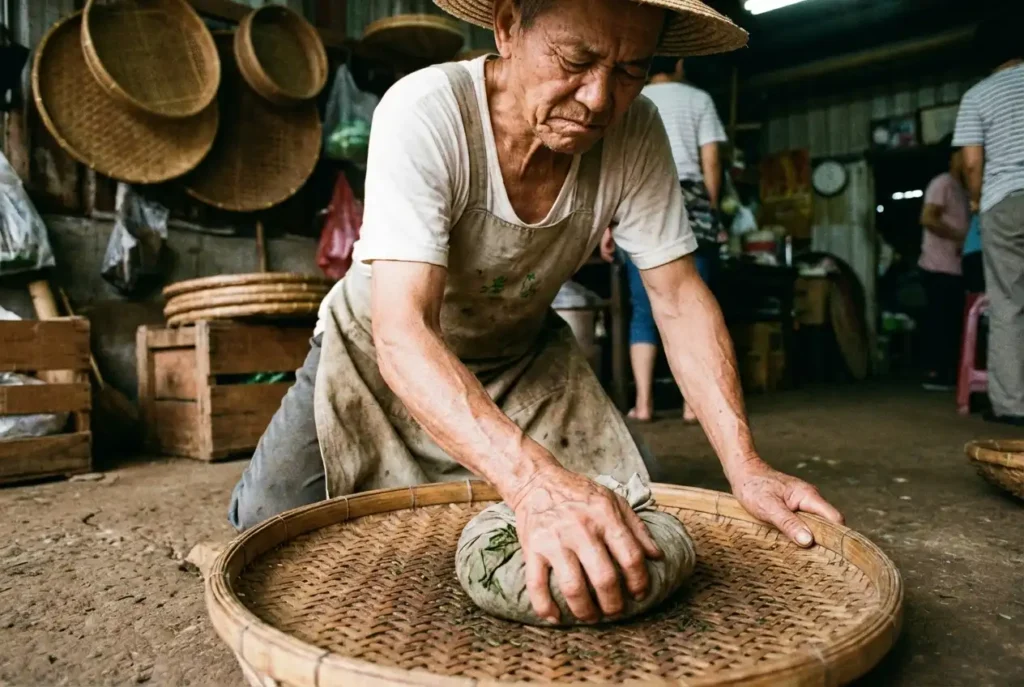
This is the secret weapon. The tea master gently tosses and shakes the bamboo trays holding the leaves. This bruising of the leaf edges stimulates oxidation, releasing the floral aromas. It is a delicate dance. Shake too hard, the tea becomes red and bitter. Shake too soft, it remains grassy. The master smells the leaves every hour, waiting for the precise moment when the “green” smell turns into a “floral” fragrance. This step defines the Oolong character.
Kill Green and Rolling
Once the desired oxidation level is reached (usually 15% to 70%), the leaves are heated in high-temperature drums to stop the enzymes (Kill Green). Then, they are rolled. Taiwanese Oolongs are typically rolled into tight balls. This ball shape is not just for aesthetics; it protects the leaf during transport and allows the tea to unfurl slowly in the cup, providing multiple steepings (infusions).
Chapter 4 Flavor Profiles and Market Applications
Taiwan produces a spectrum of Oolongs. Understanding these profiles helps you build a diverse menu.
The Green Oolongs (Jade Oolongs)
These are lightly oxidized (15-20%) and unroasted. They taste like fresh flowers, cream, and vegetation. Examples include Alishan High Mountain Tea and Baozhong. In a bubble tea shop, these serve as excellent “Premium Pure Tea” options, served without toppings to highlight the quality.
The Roasted Oolongs
Roasting is another layer of Taiwanese expertise. By baking the tea leaves over charcoal or electric heat, the flavor transforms. A light roast brings out honey notes; a heavy roast creates nutty, caramel, and chocolate notes. Dong Ding Oolong and Tie Guan Yin are famous examples. These robust teas hold up exceptionally well against milk and sugar, making them ideal for “Oolong Milk Tea.”
Chapter 5 Why Sourcing from Taiwan Matters for Your Brand
In a market flooded with cheap tea from Vietnam and mainland China, why should you pay a premium for Taiwan Oolong Tea? The answer lies in safety and branding.
Stringent Food Safety
Taiwan has some of the strictest agricultural chemical regulations in the world. Every batch of tea exported must meet rigorous MRL (Maximum Residue Limits) standards. When you buy from Mustea, you are buying peace of mind. We provide testing reports ensuring our tea is safe for import into the EU, USA, and Japan. In an era where consumers are health-conscious, being able to say “Our tea is sourced from Taiwan” is a powerful trust signal.
The “Mountain Qi” (Shan Tou Qi)
True tea connoisseurs talk about “Mountain Qi.” It is an untranslatable sensation—a feeling of clarity and resonance in the throat and chest after drinking high-quality tea. This cannot be faked with flavorings. By serving tea with Mountain Qi, you elevate your brand from a “drink shop” to a “tea specialist.”
Chapter 6 How Mustea Brings Taiwan to the World
At Mustea, we bridge the gap between the artisanal farmer and the global market. We do not just buy from the open market; we contract directly with farmers in Lishan, Alishan, and Mingjian. This ensures that the Taiwan Oolong Tea you receive in New York or Dubai is fresh and authentic. We also specialize in standardizing these artisanal products. A single farm might produce slightly different batches each day. Mustea’s master blenders unify these batches to create a consistent SKU that you can build a franchise around. We preserve the soul of the artisan while providing the reliability of a factory.
FAQ
Q1 What is the difference between Green Tea and Oolong Tea? Green tea is unoxidized, preserving the grassy, vegetal flavor. Oolong tea is semi-oxidized, involving a complex process of withering and shaking that creates floral and creamy notes not found in green tea.
Q2 Does Taiwan Oolong Tea contain caffeine? Yes, it does. However, the caffeine release is slower and steadier than coffee due to the presence of L-theanine, which promotes relaxation. A cup typically has 30-50mg of caffeine.
Q3 How should I brew loose leaf Oolong for my shop? For a commercial base, we recommend a ratio of 1:40 (1g tea to 40ml water). Steep at 95°C for 7-10 minutes, covered. For premium individual cups, use a higher ratio and shorter multiple infusions.
Q4 Why is High Mountain Tea more expensive? It is harvested by hand on steep slopes where machines cannot go. The yield is lower due to the climate, and the demand is high. You are paying for the labor and the rarity of the terroir.
Q5 Can I use Oolong Tea for fruit tea? Absolutely. Lightly oxidized Oolongs like Four Seasons Spring pair beautifully with citrus and tropical fruits like passion fruit and mango, enhancing the fruitiness without overpowering it.
Q6 What is the shelf life of Taiwan Oolong Tea? Vacuum-sealed Oolong tea can last 2 years. Roasted Oolongs can last even longer and may even improve with age if stored correctly (cool, dark, dry).
Q7 Is “Milk Oolong” flavored with milk? Authentic Jin Xuan Milk Oolong is not flavored; the milky taste is natural. However, there are cheap flavored versions on the market. Mustea supplies authentic, natural Jin Xuan.
Q8 How do I know if my tea is really from Taiwan? Look for a Certificate of Origin. Also, trust your palate. Authentic Taiwan Oolong has a long-lasting aftertaste (Hui Gan), whereas lower-quality imitations often fade quickly or leave a drying sensation.
Q9 What is the best Oolong for Milk Tea? We recommend a Roasted Oolong or a Tie Guan Yin. The roasted, nutty notes cut through the richness of the milk and sugar, creating a balanced and flavorful drink.
Q10 Does Mustea offer organic Taiwan Oolong? Yes, we have relationships with certified organic farms in Taiwan. However, organic tea supply is limited and comes at a higher premium. Contact us for availability.
Summary
The secret of Taiwan Oolong Tea lies in the harmonious convergence of heaven (climate), earth (terroir), and human (craftsmanship). It is a product that cannot be mass-produced elsewhere without losing its soul. For the global tea business owner, offering authentic Taiwanese tea is a statement of quality. It tells your customers that you care about what is in their cup. From the mist-covered peaks of Alishan to the bustling streets of your city, Mustea is dedicated to delivering this experience. We handle the complexities of sourcing, quality control, and logistics, so you can focus on serving the world’s best tea.
Are you ready to upgrade your tea menu with the authentic taste of Taiwan? Contact Mustea today to request samples of our award-winning High Mountain and Roasted Oolongs.

