
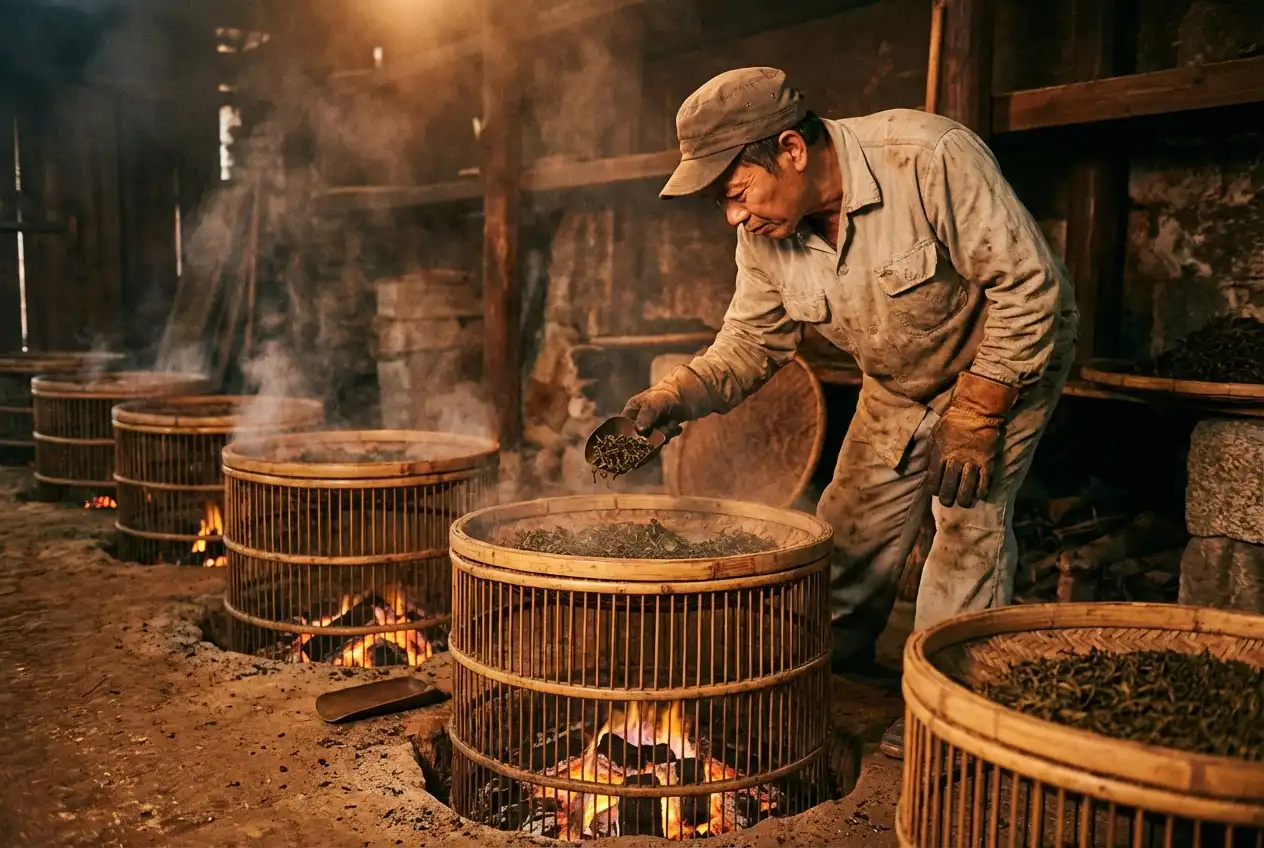
In the sophisticated lexicon of Taiwanese tea, if oxidation is the body of the tea, then roasting is its spirit. For global tea buyers and bubble tea shop owners, the world of Oolong can often feel divided into two simplistic categories: green and black. However, the true magic of Oolong lies in the spectrum between them, specifically in the transformative power of heat. This is the domain of Roasted Oolong Tea.
At Mustea, we view roasting not just as a manufacturing step, but as a culinary art form akin to coffee roasting. It is a dangerous dance with fire. A master roaster must apply precise heat to finished tea leaves to alter their chemical composition, turning the grassy, floral notes of a raw tea into the rich, nutty, and caramel notes of a mature tea. For a beverage brand, understanding these nuances is critical. A Light Roast Oolong might be the perfect refreshing iced tea for summer, while a Heavy Roast Oolong provides the robust backbone needed to cut through rich milk and brown sugar in winter. This guide will take you into the roasting rooms of Taiwan, explaining the “Fire Art” that creates some of the most sought-after flavors in the world.

Chapter 1 The Chemistry of Fire Why We Roast
To choose the right product, you must understand what happens inside the leaf. When tea leaves are subjected to controlled heat (ranging from 80°C to 140°C) over distinct periods, a complex series of chemical reactions occurs. The most famous of these is the Maillard reaction—the same chemical process that turns bread into toast and gives seared steak its savory flavor.
During roasting, the amino acids and sugars in the tea leaf interact to create new flavor compounds. The “green” grassy notes (hexanol) are driven off, replaced by pyrazines and pyrroles which taste nutty, woody, and roasted. Furthermore, roasting reduces the moisture content to below 3%, making the tea incredibly stable for long-term storage. For our B2B clients, this is a massive advantage. A well-roasted Oolong from Mustea does not go stale quickly; instead, it maintains its character, ensuring that the drink you serve in London tastes just as vibrant as it did in the tasting room in Nantou.
Chapter 2 Light Roast The Floral Guardian
Light roasting, often called “Wen Huo” (Gentle Fire), is a delicate process. The goal here is not to change the fundamental character of the tea but to polish it. It typically involves lower temperatures for shorter durations.
Flavor Profile
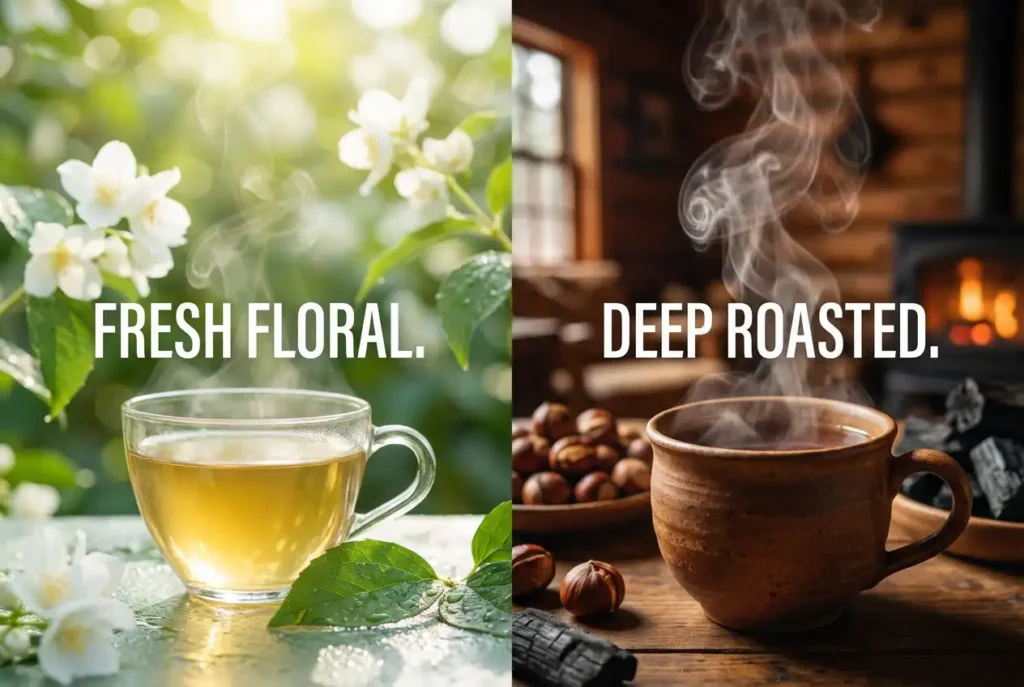
A light roast Roasted Oolong Tea retains the vibrant floral aroma of the original leaf—think orchids, lilies, and gardenias—but adds a subtle layer of warmth. It removes any raw “vegetal” edge that might taste too grassy to some consumers. The liquor color is typically a golden-yellow, bright and clear.
Best Market Applications
We recommend Light Roast Oolongs for “Pure Tea” menus or “Fruit Tea” bases. Because the roast is subtle, it does not overpower delicate fruit flavors like peach, lychee, or passion fruit. It provides a sophisticated, aromatic base that elevates a standard fruit tea into a premium beverage. It is particularly popular in the Asian and North American markets where “freshness” is a key selling point.
Chapter 3 Heavy Roast The Dark Knight
On the other end of the spectrum lies Heavy Roast, or “Zhong Huo” (Strong Fire). This is where the skill of the Mustea roaster is truly tested. The tea is roasted for many hours, sometimes over days, often using traditional charcoal or modern infrared electric roasters.
Flavor Profile
A heavy roast transforms the tea completely. The floral notes are replaced by deep, resonant flavors of toasted nuts, caramel, dark chocolate, and sometimes a hint of smoke or tobacco. The tea liquor turns a deep amber or reddish-brown. Crucially, heavy roasting creates a “sweet aftertaste” (Hui Gan) that coats the throat. It removes almost all astringency, making the tea incredibly smooth.
Best Market Applications
Heavy Roast Oolong is the undisputed champion for Milk Tea. Its bold, robust profile can punch through the fat of milk (or non-dairy creamer) and the sweetness of sugar. While a delicate green tea might get lost in a latte, a Heavy Roast Oolong stands its ground, creating that classic “Roasted Milk Tea” flavor that is exploding in popularity globally. It is essential for any menu featuring Brown Sugar or heavy toppings like pudding.
Chapter 4 The Caffeine Factor Stomach Sensitivity
One of the most practical benefits of Roasted Oolong Tea is its gentleness. Many consumers complain that Green Tea or unroasted High Mountain Tea hurts their stomach or causes jitters if consumed on an empty stomach. This is due to the high levels of catechins and active caffeine.
The roasting process degrades some of these catechins and alters the caffeine molecule structure (sublimation). As a result, Roasted Oolong is considered “warm” in Traditional Chinese Medicine. It is much gentler on the digestive system. For shop owners, this is a powerful marketing angle. You can promote your Heavy Roast Oolong/Tie Guan Yin series as “Low Irritation” or “Stomach Friendly,” appealing to customers who are sensitive to caffeine or those seeking a comforting evening drink.
Chapter 5 The Aging Potential Vintage Oolong
Unlike Green Tea, which must be consumed fresh, Roasted Oolong has the unique ability to age. In Taiwan, there is a niche but high-value market for “Aged Oolong” (Lao Cha).
Every year, the tea is taken out and re-roasted to remove moisture. Over 10, 20, or 30 years, the tea develops a medicinal, plum-like sourness and an incredibly smooth texture. While this is a niche product for high-end tea salons, Mustea can source these rare vintage teas for clients looking to create an exclusive “Reserve Menu.” Offering a 10-year Aged Oolong creates a story of luxury and time that justifies a significantly higher price point.
Chapter 6 Mustea’s Roasting Expertise
Why choose Mustea for your Roasted Oolong Tea supply? Because we control the fire. Many suppliers simply buy finished tea from a factory and resell it. We contract with roasting masters who understand the specific needs of the bubble tea market.
We offer a “Custom Roast Level” service. Do you find the standard Dong Ding Oolong too smoky? We can adjust the temperature to create a “Medium-Light” roast that bridges the gap. Do you want a “Charcoal Roasted” profile for a signature winter drink? We use traditional charcoal firing techniques to infuse that authentic smoky aroma that electric ovens cannot replicate. We ensure that consistency is maintained batch after batch, so your chain’s signature flavor never drifts.
Chapter 7 Menu Engineering with Roast Levels
To maximize sales, we advise our clients to categorize their menu not just by “Tea Type” but by “Roast Level.” This educates the customer and helps them navigate their preference.
- The Refresher Series (0-20% Roast): High Mountain Oolong, Four Seasons Spring. Target: Summer, Lunch crowd, Fruit Tea lovers.
- The Classic Series (30-50% Roast): Dong Ding Oolong. Target: Traditionalists, those who like balance.
- The Rich Series (60-100% Roast): Tie Guan Yin, Heavy Roast Oolong. Target: Winter, Dessert seekers, Milk Tea addicts.
By structuring your menu this way, you encourage customers to try different teas for different moods, increasing their frequency of visits.
FAQ
Q1 What is the difference between Dong Ding Oolong and Tie Guan Yin?
Dong Ding is a region and a style, typically using the Qing Xin cultivar with a medium roast (30-40%), resulting in a honey/toasty flavor. Tie Guan Yin is a specific cultivar and processing style that involves a very heavy roast (60-80%) and a distinct “Tart” metallic finish, tasting more like burnt caramel and iron.
Q2 Does roasting increase the caffeine content?
No, it generally decreases it. The high heat causes some caffeine to sublimate (turn into gas) and leave the leaf. Therefore, a heavy roast tea usually has slightly less caffeine than a light roast or green tea.
Q3 Can I cold brew Roasted Oolong Tea?
Yes, and it is delicious. Cold brewing a medium or heavy roast oolong extracts the sweet, caramel notes without pulling out the tannins. The result is an incredibly smooth, sweet, nutty iced tea that is very popular in modern cafes.
Q4 How do I store roasted tea?
Roasted tea is very stable. It should be stored in an opaque, airtight bag (aluminum foil is best) in a cool, dry place. Unlike green tea, it does not need refrigeration. In fact, keeping it at room temperature allows it to “settle” and mellow over time.
Q5 Why does my roasted tea taste sour?
A sour taste can be a defect (improper fermentation) or a characteristic of aging. However, in cheap commercial tea, sourness usually means the tea was not dried properly and has absorbed moisture (gone stale). Mustea’s roasting process ensures the moisture content is low enough to prevent this sour spoilage.
Q6 Is charcoal roast better than electric roast?
“Better” is subjective. Charcoal roasting adds a distinct smoky flavor and is considered more traditional and artisanal. Electric roasting provides more precise temperature control and a cleaner taste, focusing on the tea’s natural flavor rather than the smoke. We supply both depending on your preference.
Q7 What is the best sugar to pair with Roasted Oolong?
Brown sugar or cane sugar pairs best. The molasses notes in brown sugar complement the caramel notes of the roast perfectly. Honey is also an excellent choice for medium roast oolongs.
Q8 How long should I brew roasted tea for milk tea?
We recommend a longer, hotter brew. Use water at 95°C-100°C and steep for 10-12 minutes (for a concentrated base). The heat is needed to extract the heavy flavor compounds locked in the roasted leaf.
Q9 Can I re-roast tea if it goes stale?
Yes. This is a traditional technique called “Refreshing the Fire.” If you have old inventory that has lost its aroma, a skilled roaster can re-fire it to bring back the life and aroma. Mustea offers this consultation for large partners.
Q10 Does the tea color indicate the roast level?
Generally, yes. A light roast is golden-yellow. A medium roast is amber. A heavy roast is dark reddish-brown. However, the oxidation level also affects color, so use taste as your ultimate guide.
Summary
Roasted Oolong Tea is the bridge between the fresh innocence of green tea and the mature depth of black tea. It offers a complexity of flavor—nuts, caramel, fruit, and smoke—that appeals to the sophisticated palate. For the tea shop owner, it is a versatile weapon. It allows you to create rich, satisfying milk teas without relying on artificial flavors, and it offers a stomach-friendly option for health-conscious consumers. At Mustea, we invite you to explore the “Fire Art” of Taiwan. Whether you need a subtle light roast for a peach tea or a charcoal-fired heavy roast for a signature latte, our roasting masters are ready to craft the perfect profile for your brand.
Are you ready to add depth and sophistication to your menu? Contact Mustea today to request a tasting flight of our signature Roasted Oolong collection.

