
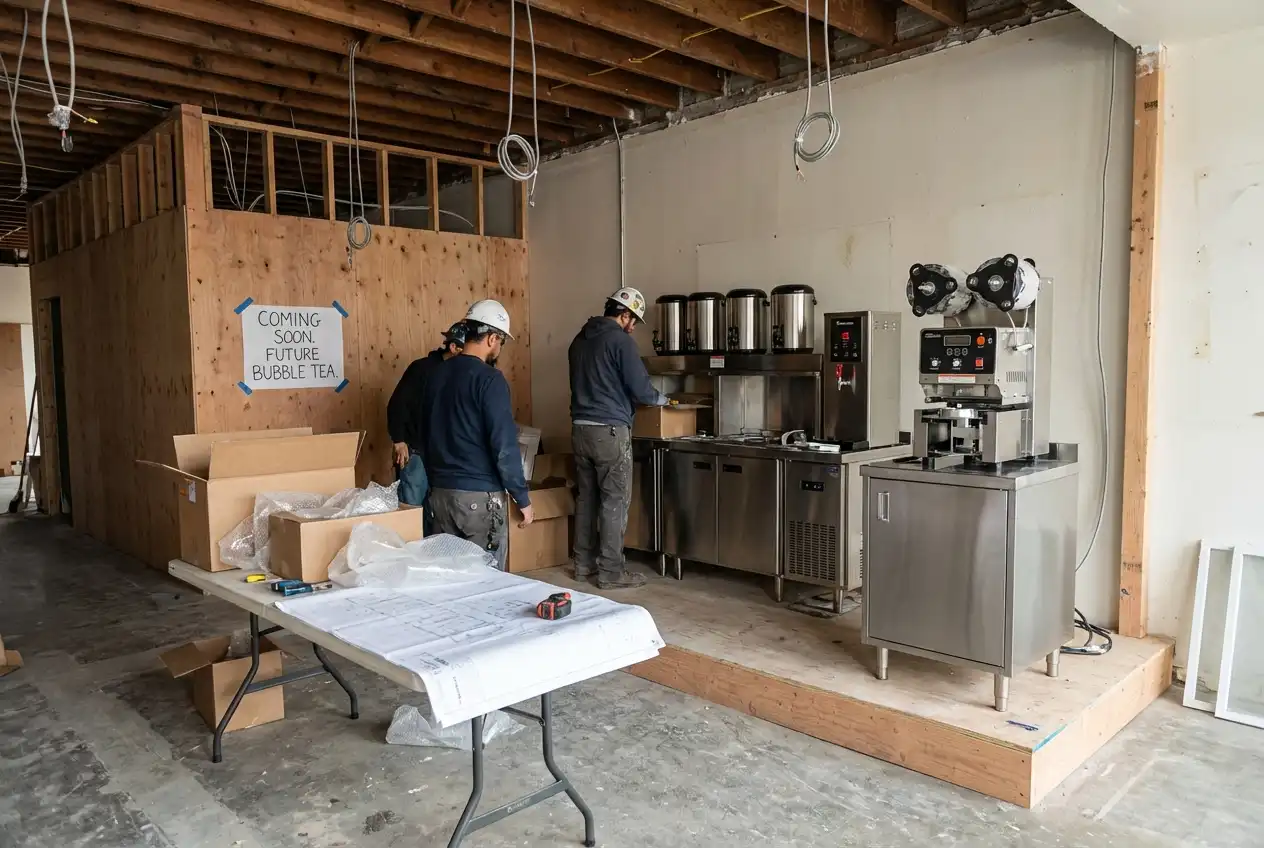
Opening a bubble tea shop is one of the most dynamic business opportunities in the current global beverage market. Whether you are targeting the bustling streets of New York, the historic avenues of Paris, or a quiet suburb in Australia, the demand for authentic Taiwanese boba tea continues to rise efficiently. However, for entrepreneurs and investors, the excitement of a new venture often meets the complex reality of financial planning. The question is not just how to make tea, but exactly how much capital is required to turn a concept into a profitable reality.
As Mustea, a dedicated strategy partner in the global tea supply chain, we have assisted countless clients in navigating these financial waters. We understand that a successful launch depends on transparent cost analysis and strategic resource allocation. This guide goes beyond simple estimates. We will dismantle the financial structure of the bubble tea shop cost, covering everything from machinery and interior design to the critical initial inventory of tea leaves and toppings. By understanding these numbers, you transform from a dreamer into a prepared business owner ready to capture market share without the fear of running out of capital.

Chapter 1 Location and Leasehold Improvements for Your Bubble Tea Shop
The most significant variable in your startup budget is undoubtedly the physical location. The cost of securing real estate varies wildly depending on the country, city, and specific district. However, the categories of expenditure remain consistent. When calculating your bubble tea shop cost, the lease and physical build-out will likely consume the largest portion of your initial capital, often exceeding 40% of the total budget.
Security Deposits and Rent Strategy
In most prime markets, landlords require a security deposit equivalent to three to six months of rent. If you are opening a 500-square-foot takeaway store in a high-traffic urban area, this initial outlay can range from $10,000 to $50,000 USD immediately. It is crucial to negotiate rent-free periods during renovation, a common practice that can save thousands in initial capital. This period allows you to execute construction without the pressure of monthly operational expenses, effectively lowering your effective bubble tea shop cost during the critical pre-launch phase.
Renovation and Build-Out Expenses
Turning an empty shell into a functional beverage station involves specialized construction. Unlike a retail clothing store, a bubble tea shop requires heavy plumbing and electrical work. You will need extensive drainage for sinks and ice machines, grease traps if required by local code, and upgraded electrical panels to handle commercial equipment. The bar counter needs to be custom-built for workflow efficiency. At Mustea, we often advise clients that the flow of the workspace dictates the speed of service. A poorly designed counter slows down staff during rush hour, directly impacting revenue. Expect renovation costs to range between $40,000 and $100,000 USD, depending on the condition of the site and the quality of materials used. High-end finishes and custom joinery will push this number higher, but they also signal premium quality to your customers.
Permits and Licenses
Before you serve your first cup, you must satisfy local regulations. This includes business registration, health department permits, fire safety inspections, and signage permits. In strict regions like California or parts of Western Europe, the architectural drawing approvals alone can take months and cost upwards of $5,000 USD. Ignoring these timelines is a costly mistake that leads to paying rent on a store that cannot yet open. You must budget for expeditor fees or consultant fees if you are unfamiliar with local zoning laws, as delays here increase your total bubble tea shop cost significantly.
Chapter 2 Commercial Equipment and Machinery Breakdown
Your equipment is the engine of your business. Reliability is paramount. Using residential-grade blenders or cheap sealers will lead to breakdowns during peak hours, resulting in lost sales and damaged reputation. A professional setup is not just a luxury; it is a necessity for maintaining the high output speed required in the tea industry.
The Essential Machinery List
To operate efficiently, a standard shop requires specific industrial-grade units.
The Sealing Machine is iconic to bubble tea. A high-quality automatic sealer costs between $1,000 and $3,000 USD. It ensures a leak-proof seal that is essential for takeaway orders.
The Fructose Dispenser ensures consistency in sweetness levels, a key factor in customer retention. These precision machines cost approximately $1,500 USD.
Tea Brewers and Shaking Machines modernize the process. While traditional hand-shaking is an art, automatic shakers guarantee that the drink is mixed perfectly every time without exhausting your staff.
Refrigeration and Ice Makers are the workhorses. You will need under-counter fridges for milk and tea storage, and a high-capacity commercial ice maker. A machine that produces 500 lbs of ice per day is a minimum standard for busy shops, often costing $3,000 to $5,000 USD.
POS Systems and Kitchen Displays
Modern bubble tea shops rely on technology for speed. A Point of Sale system that integrates with kitchen display screens and label printers is non-negotiable. Label printers are particularly important for customization, printing exact sugar and ice levels on every cup to prevent errors. Setting up a full hardware and software suite typically costs around $2,000 to $4,000 USD initially, plus monthly software fees. This technology investment reduces long-term labor costs by streamlining the ordering process and reducing human error.
Chapter 3 Initial Ingredient Inventory and Supply Chain
This is where Mustea brings significant value to your planning. Your initial inventory is not just about buying products; it is about establishing a supply chain that guarantees consistency and quality. The bubble tea shop cost model must account for a robust starting inventory to avoid stockouts during your grand opening.
Tea Leaves and Powders
The soul of your product is the tea. Sourcing premium loose-leaf tea, such as Taiwan High Mountain Oolong or robust Assam Black Tea, differentiates you from competitors using low-grade dust. You should budget for at least 3 months of dry stock to buffer against shipping delays. For a standard startup, this initial tea order is often between $3,000 and $6,000 USD. High-quality tea leaves are the foundation of your menu and arguably the most important variable in customer retention.
Toppings and Syrups
Toppings like tapioca pearls, coconut jelly, and popping boba are heavy and require strategic shipping planning. Syrups and fruit jams provide the flavor profiles for your fruit teas. Because these items have shelf lives, inventory management is key. An initial order of diverse toppings and flavorings usually runs between $4,000 and $8,000 USD. The texture of your tapioca pearls (the Q texture) defines the quality of your shop in the eyes of connoisseurs.
Custom Packaging
Your cup is a walking billboard. Investing in custom-printed PP or PET cups, sealing film with your logo, and branded straws is a marketing expense disguised as an operational cost. Minimum Order Quantities for custom printing are higher than generic items. You might need to order 30,000 to 50,000 cups upfront to get a good price, which requires an upfront cash flow of $5,000 to $10,000 USD, but this dramatically lowers your unit cost in the long run.
Chapter 4 Operational Training and Marketing Strategy
Hardware and ingredients are useless without the software of human skill and brand awareness. Many entrepreneurs underestimate this section of the bubble tea shop cost, assuming they can learn everything from online videos. However, professional training is what separates a hobbyist from a professional brand.
Professional Training
Making bubble tea looks simple, but cooking tapioca pearls to the perfect texture and balancing tea astringency with milk requires skill. Mustea offers comprehensive training because we know that bad drinks kill businesses faster than high rent. Budgeting $2,000 to $5,000 USD for professional training ensures your staff can troubleshoot quality issues and maintain workflow speed. This cost covers recipe development, SOP creation, and hands-on practice with equipment.
Branding and Launch Marketing
You need a logo, a menu board design, and a digital presence before you open. A Soft Opening event invites influencers and locals to try your product at a discount. Allocating $3,000 to $8,000 USD for initial branding, social media ads, and launch promotions is necessary to generate immediate cash flow upon opening. Effective marketing accelerates your break-even point by driving initial foot traffic.

Chapter 5 Total Cost Breakdown Summary
To give you a clearer picture, let us compile these figures into a typical investment range for a standard 500 to 1000 sq ft bubble tea shop in a developed market like the US or Europe. This table serves as a quick reference for your financial planning.
| Cost Category | Estimated Range (USD) | Notes |
| Deposit & Rent (3 months) | $10,000 – $30,000 | Varies heavily by city tier |
| Renovation & Build-out | $40,000 – $100,000 | Includes plumbing/electric |
| Equipment & Machinery | $15,000 – $30,000 | Essential commercial grade |
| Initial Inventory (Ingredients) | $8,000 – $15,000 | Includes tea, toppings, syrups |
| Custom Packaging (Bulk) | $5,000 – $10,000 | Branded cups and film |
| Licenses & Permits | $2,000 – $8,000 | Local government fees |
| Marketing & Training | $5,000 – $10,000 | Soft opening and staff education |
| POS & Technology | $2,000 – $5,000 | Hardware and software setup |
| Reserve Capital | $15,000 – $30,000 | For first 6 months operating loss |
| Total Estimated | $102,000 – $238,000 |
Chapter 6 The Hidden Value of a Strategic Partner
Looking at the table above, the complexity is evident. This is why partnering with a supplier like Mustea is about more than just buying tea leaves. When you work with us, we help you optimize the Initial Inventory and Equipment lines. We consolidate shipments to save on logistics costs. We advise on the specific machinery that matches your menu, preventing you from buying unnecessary expensive equipment.
For example, if your menu focuses on Fruit Teas, you need different equipment priorities than a shop focusing on heavy Brown Sugar Milk Teas. We tailor the supply list to your concept, effectively reducing your startup waste. Our goal is to ensure that every dollar you spend contributes to a faster Return on Investment. We do not just sell products; we sell a business solution that mitigates the risk of your bubble tea shop cost spiraling out of control.
Chapter 7 Understanding ROI and Long Term Profitability
While the initial bubble tea shop cost can seem daunting, understanding the potential Return on Investment is crucial for maintaining perspective. The beverage industry is known for high gross margins. A typical cup of bubble tea might cost between $0.50 to $1.20 USD to produce, including the cup, tea, milk, and toppings, but it retails for $5.00 to $7.00 USD. This significant markup is what attracts investors. However, the gap between gross profit and net profit is where cost control becomes vital. Rent, labor, and utilities will eat into your revenue.
By investing in quality equipment upfront, you reduce maintenance downtime. By securing a reliable supplier like Mustea, you ensure product consistency which builds a loyal customer base. Loyalty is the key to profitability. Acquiring a new customer is expensive; retaining an existing one is where your profit lies. Therefore, your initial bubble tea shop cost should be viewed not just as expenses, but as an investment in a system designed for retention and efficiency.
FAQ
Q1 How much does it cost to open a small bubble tea kiosk versus a full store?
A kiosk typically ranges from $50,000 to $100,000 USD because renovation and rent costs are significantly lower. A full storefront usually starts at $120,000 USD and goes up depending on the size and luxury level of the interior.
Q2 What is the most expensive part of opening a bubble tea shop?
Usually, the renovation and construction is the largest expense, often taking up 35% to 50% of the total budget. This includes plumbing, electrical upgrades, and carpentry needed to make the space suitable for food service.
Q3 How much money should I set aside for initial ingredients?
We recommend budgeting between $8,000 and $15,000 USD. This ensures you have enough stock for the first few months and allows you to reach Minimum Order Quantities for better wholesale pricing on your startup cost.
Q4 Can I save money by buying used equipment?
Yes, but be cautious. Used fructose machines and sealers often have calibration issues. If they fail during a rush, the repair cost and lost sales will exceed the savings. We recommend buying core machinery new with a warranty.
Q5 What is the typical profit margin for a cup of bubble tea?
The gross profit margin is generally high, ranging from 60% to 80% per cup. However, the net profit margin after rent, labor, and utilities is typically between 15% and 25%.
Q6 Does Mustea offer help with store design?
While we are primarily an ingredient and equipment supplier, we provide advisory services on bar layout and workflow efficiency to ensure your operations run smoothly within your budget.
Q7 How much does shipping ingredients from Taiwan cost?
Shipping costs depend on the volume and destination. For a full pallet, air freight is fast but expensive, while sea freight is cost-effective but takes longer. Mustea helps calculate the most efficient logistics solution for you.
Q8 Do I need a franchise to be successful?
Not necessarily. A franchise costs more upfront due to franchise fees and royalties but offers a proven system. An independent shop saves on fees and allows total creative control, but requires more effort in branding and sourcing.
Q9 How long does it take to open a shop from planning to launch?
Typically, it takes 6 to 9 months. Finding a location takes 2 to 3 months, permitting takes 1 to 3 months, and construction plus training takes another 2 to 3 months.
Q10 Why should I buy ingredients from Mustea instead of local wholesalers?
Mustea supplies directly from the source in Taiwan, ensuring authentic flavor and higher quality control. We also offer customization that local wholesalers cannot provide, allowing you to create unique signature drinks.
Summary
Opening a bubble tea shop is a significant financial commitment, with startup costs ranging typically from $100,000 to $250,000 USD for a standard storefront. The investment goes into three main buckets: Real Estate, Equipment, and Product. Success lies in meticulous planning and controlling these initial expenditures without compromising on quality. As your strategic partner, Mustea is committed to guiding you through this process. We provide the high-quality raw materials that keep customers coming back, and the industry expertise to help you avoid costly startup mistakes. Your success is our success.
Would you like to discuss your specific budget and get a customized quote for your initial equipment and ingredient list? Contact the Mustea team today to start your journey.

